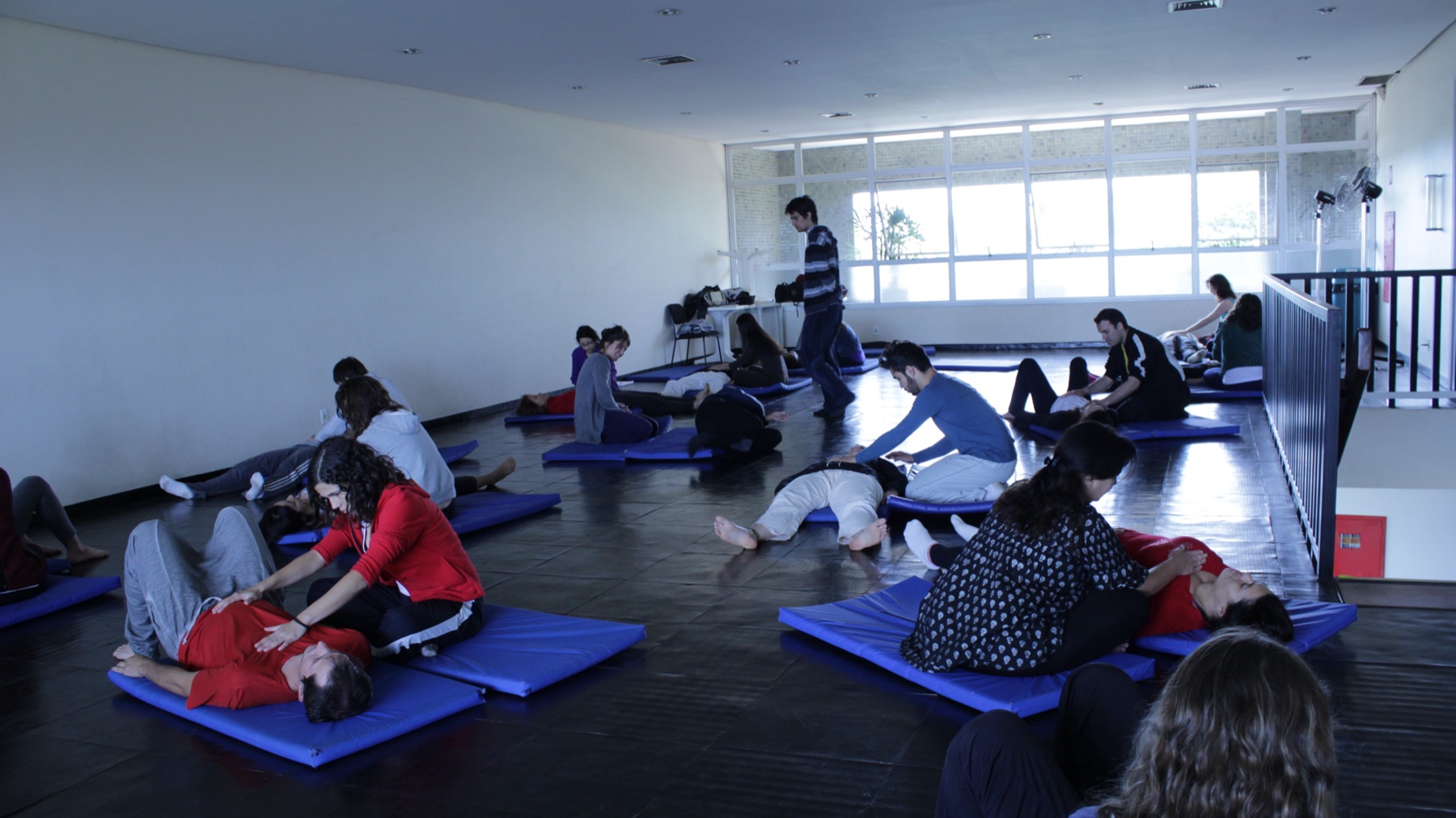
Learning pathway
Embodied learning / Interdisciplinary study
Movement Studies Academy
An educational institution cultivating embodied learning through thoughtful teaching, interdisciplinary dialogue, and sustained practice.
Embodied learning / Interdisciplinary study
An educational institution cultivating embodied learning through thoughtful teaching, interdisciplinary dialogue, and sustained practice.
Relational learning
Student autonomy
Lineage & inquiry
Human judgment
Why we exist
Movement Studies Academy offers an educational home where diverse embodied practices can meet without being flattened into a single method. We support sustained study across somatic education, dance, music, artistic research, pedagogy, and interdisciplinary practice.
Embodied learning is a lifelong practice. We teach with care for differing histories and sensitivities, prioritizing clear consent, choice in pacing, transparent communication, and respect for boundaries. Students are free to adapt, pause, observe, or step out without judgment. We honor the teachers, traditions, and sources that shape our work while creating room for dialogue, research, and innovation. Learning here is relational rather than transactional: it grows through attention, curiosity, practice, and mutual respect. Technology may support administration, research, and access, but educational judgment and teaching remain human responsibilities. We do not promise quick transformation; we cultivate perception, agency, and the conditions for meaningful learning over time.
Programs / Learning pathways
MSA organizes study around connected fields of practice. Courses, workshops, laboratories, and mentoring can develop within each pathway while remaining part of a shared educational culture.
Learning pathway
Learning pathway
Learning pathway
Learning pathway
MSA offers education, not medical or therapeutic treatment. Participation is based on informed choice, and each person remains responsible for their own decisions and boundaries.
Read our commitmentsResearch / Practice
The Academy studies how bodies learn, compose, collaborate, remember, adapt, and imagine. Work is carried through practice and documented as scores, essays, conversations, public sharings, and field notes.
Lineages / Mentors / Sources
MSA studies the people, cultural contexts, and relationships through which movement knowledge travels. These figures are points of orientation within a wider field, not a closed canon.
We approach lineage through attribution, contextual study, critical dialogue, and direct practice rather than ownership or uncritical inheritance.
A physicist, engineer, martial artist, and educator whose method studies how sensing, movement, attention, and learning can expand human possibility.
Read sourceMoshe Feldenkrais' first assistant, collaborator, and first authorized practitioner, she carried the work through decades of precise teaching and international study.
View interview archiveHe organized Seitai as an approach to bodily education and developed practices and concepts including katsugen undo, yuki, and taiheki.
Read sourceHaruchika Noguchi's son, he continued research into Japanese body culture and articulated Do-ho through the Shintai Kyoiku Kenkyusho.
Read sourceA senior source for MSA's study of Seitai-ho, Do-ho, spontaneous movement, Japanese body education, calligraphy, voice, and performance.
View mentor profileA senior source for MSA's inquiry into dance, improvisation, Feldenkrais-informed learning, Brazilian movement research, and choreographic practice.
View mentor profileHistorical note. Haruchika Noguchi developed and founded Seitai. His son Hiroyuki Noguchi continued this body-education research and is particularly associated with Do-ho and the Shintai Kyoiku Kenkyusho.
Events
Weekly Contact Improvisation jam in Delft with Cristhy Mattos. €5 contribution; no registration needed.
A recurring class and jam at Time Window with Cristhy and Pau. Registration by email through Roffa CI.
A private 75-minute movement studies lesson with Juliano Vendemiatti, available to request online.
Faculty / Facilitators
Faculty are more than a list of instructors. Each educator brings an independent voice while helping steward a culture of care, attribution, inquiry, and pedagogical integrity.
Movement awareness, touch-based study, breath, sensation, coordination, and developmental movement.
Improvisation, composition, contemporary dance, scoring, performance, and collective creative process.
Practice-based research, reflective documentation, artistic inquiry, fieldwork, and publication.
Clear consent, choice in pacing, respect for boundaries, thoughtful dialogue, and accessible learning environments.
Academy library
These public texts form a durable reference for participants, faculty, and collaborators. They will be revisited as the Academy learns and grows.
Contact
We welcome enquiries from prospective participants, educators, researchers, host venues, and partner organizations worldwide.
info@movementstudies.org